Have you ever wondered what happens when a Filipino favorite meets a classic American pie?
The answer is buko pie—a creamy, coconut-filled pastry with a buttery crust that has become one of the Philippines’ most loved desserts.
For many Filipinos, buko pie is more than just dessert. It brings back memories of road trips, family visits, pasalubong, and stopping at a bakery to bring home a warm box of pie.
And for me, buko pie has always been a personal favorite.

What Is Buko Pie?
“Buko” means young coconut in Filipino. It is different from the Filipino word puso, which means heart. Buko refers to the young, tender coconut meat found inside a green coconut.
Buko pie is made with this soft coconut meat, coconut juice, sugar, and a creamy filling. Everything is tucked inside a flaky double pie crust and baked until golden brown.
The result is a pie that is creamy but still has little pieces of tender coconut in every bite. The crust adds a buttery, crisp contrast to the soft filling.
It is a simple idea, but it works so well.
The Story Behind Buko Pie
Buko pie is strongly linked to Laguna, especially Los Baños, south of Manila. Laguna is known as “buko pie country,” and the dessert has become one of the province’s most famous food souvenirs. (Ckbk)
The story of its beginnings is especially interesting.
The Pahud family is widely credited with creating the famous Laguna-style buko pie. The idea was inspired by American apple pie. Since apples were not easy to find locally, the family looked at an ingredient that was plentiful in the area: young coconut.
That simple swap helped create a Filipino classic.
The Original Buko Pie, also known as Orient, became associated with Los Baños, while other famous shops later helped make buko pie a must-buy pasalubong when traveling through Laguna. (Kawaling Pinoy)
Today, you can find buko pie in many parts of the Philippines, but Laguna remains the place most closely connected to this beloved dessert.
Why Homemade Buko Pie Is Even Better
There is something special about making Filipino desserts at home.
When you make your own buko pie, you control what goes into it.
You can choose fresh young coconut. You can use good-quality butter, cream, and flour. You can also adjust the sweetness to your liking.
That is especially helpful if you are trying to cut back on sugar.
For this recipe, you can use regular sugar, or you can experiment with a sugar-free granulated sweetener that is designed for baking. Just remember that different sugar substitutes behave differently when cooked, so the texture may change a little.
For me, homemade means being able to choose better ingredients and make the dessert fit our own taste.
And the best part?
The whole kitchen smells like coconut and buttery pastry while the pie is baking.
The Buko Pie Recipe
This recipe is an adapted version of Amy Besa and Romy Dorotan’s buko pie from Memories of Philippine Kitchens. Their version describes buko pie as a famous dessert of Laguna and serves it with vanilla or purple-yam ice cream.
Makes One 9-Inch Pie
For the Filling
- ½ cup young coconut juice, reserved from the buko
- ¼ cup cornstarch
- ½ cup heavy cream
- 1½ cups sugar
- 4 cups shredded young coconut, juice reserved
You can use fresh young coconut or frozen grated unsweetened young coconut that has been thawed and drained.
For the Egg Wash
- 1 large egg yolk
- 1 tablespoon milk
For the Basic Pie Pastry
This makes enough for one 9-inch double crust.
- 2¼ cups all-purpose flour
- ½ teaspoon salt
- 1 teaspoon baking powder
- ½ pound (2 sticks) unsalted butter, chilled and cut into small pieces
- 4 to 6 tablespoons iced water
Making the Pie Crust
- Start by making the pastry.
- Sift the flour, salt, and baking powder into a large bowl.
- Add the cold butter. Using your fingertips or a pastry blender, cut the butter into the flour until the mixture looks like coarse crumbs. You should still see small pieces of butter.
- Slowly drizzle in 4 tablespoons of ice water.
- Gently mix with a fork. If the dough does not hold together, add more ice water ½ tablespoon at a time until it comes together.
- Don’t overwork the dough.
- Turn it onto a lightly floured surface and divide it into two equal pieces. Shape each piece into a disk about ½ inch thick.
- Wrap both disks and refrigerate for at least 1 hour.
- This chilling step is important. It helps keep the butter cold and gives you a flakier crust.

Making the Creamy Buko Filling
- Now comes the delicious part.
- In a small bowl, whisk the coconut juice and cornstarch until smooth.
- In a large saucepan, combine the heavy cream and sugar over medium heat. Stir until the sugar dissolves and the mixture just begins to simmer.
- Add the shredded young coconut.
- Bring it back to a simmer while stirring.
- Slowly pour in the coconut juice and cornstarch mixture. Keep stirring so it does not stick or form lumps.
- Cook for about 2 minutes, or until the filling becomes thick.
- Transfer the filling to a bowl and let it cool completely.
Don’t rush this step.
You want the filling cool before putting it into the pastry.

Putting the Buko Pie Together
- Preheat your oven to 425°F.
- Roll each chilled dough disk on a lightly floured surface until you have two circles about 14 inches wide and about ⅛ inch thick.
- Place one crust into a 9-inch pie pan. Gently press it into the bottom and sides.
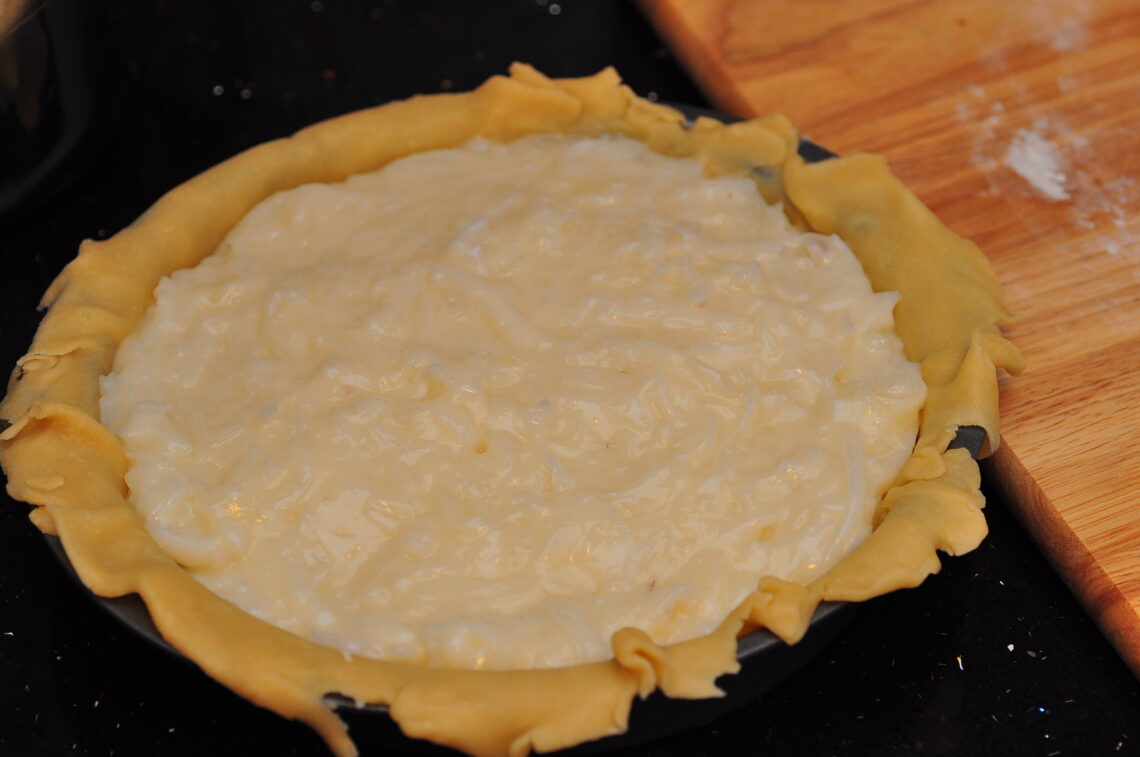
- Pour in the cooled buko filling and spread it evenly.
- Place the second crust on top.
- Fold and seal the edges, then flute them to make that classic homemade pie look.
- Next, beat the egg yolk with the milk.
- Brush the egg wash over the entire top crust.
- Using a fork or small knife, make about six small vents in the top. These holes allow steam to escape while the pie bakes.


Baking the Buko Pie
- Place the pie on a baking sheet.
- Bake at 425°F for 15 minutes.
- Then lower the oven temperature to 350°F and continue baking for another 30 to 40 minutes, or until the crust is beautifully golden brown.
The smell at this point is going to be amazing.
But wait!
Let the pie cool on a wire rack before slicing.
I know it is tempting to cut into it right away, but allowing it to cool helps the creamy coconut filling set properly.

The Best Part: That First Slice
Once the pie has cooled, cut yourself a generous slice.
Look at that golden crust.
Then look at all those tender pieces of young coconut inside.
The first bite gives you the buttery pastry followed by the creamy coconut filling. The young coconut adds a soft, slightly chewy texture that makes buko pie different from an ordinary coconut cream pie.
You can enjoy it by itself, but a scoop of vanilla or ube ice cream makes an amazing pairing. That combination of warm Filipino flavors and cold ice cream is hard to beat.

Why Buko Pie Will Always Be Special
Filipino food has a wonderful way of connecting food with memories.
Buko pie is one of those desserts.
It reminds many Filipinos of traveling through Laguna, bringing home pasalubong, sharing food with family, and enjoying something simple but special.
Making it at home gives us another way to keep those traditions alive.
We can choose the coconut. We can control the sweetness. We can use quality ingredients. And we can make a pie that tastes fresh instead of something that has been sitting on a shelf.
Most of all, we get to share it.
For me, buko pie has been my personal favorite Filipino dessert for years. There is something about the creamy young coconut filling and golden, flaky crust that never gets old.
One slice brings back the taste of the Philippines—and sometimes, that’s exactly what a good homemade dessert should do. 🇵🇭🥥❤️